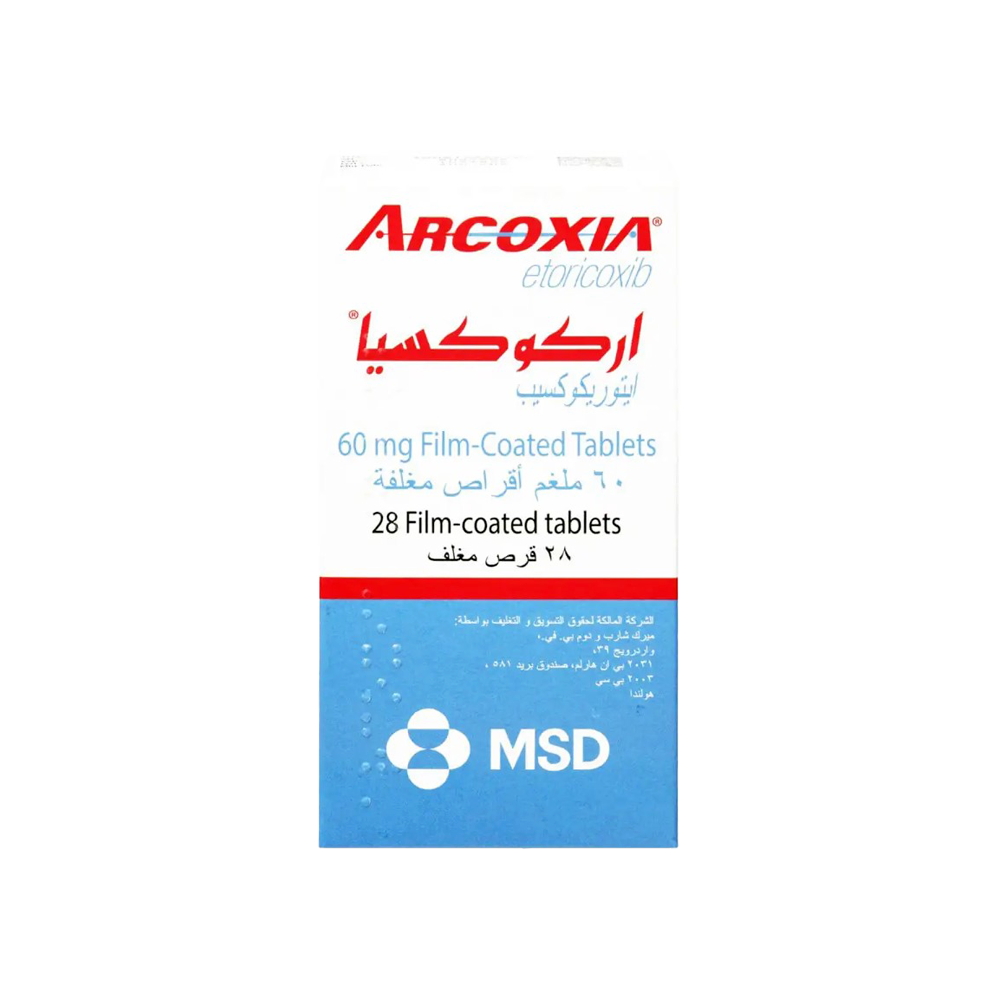
Arcoxia 60 mg tablets 28
Product description
Etoricoxib tablets 60 mg
What is Etoricoxib and what are its indications:
Etoricoxib is one of a group of medicines called selective COX-2 inhibitors.
These belong to a family of medicines called non-steroidal anti-inflammatory drugs (NSAIDs).
What are the uses of Etoricoxib?
• Helps Etoricoxib reduce pain and swelling (inflammation) in joints and muscles of people aged 16 and above suffering from osteoarthritis, rheumatoid arthritis, ankylosing spondylitis, and gout.
• Also used for short-term treatment of moderate pain after dental surgery in people aged 16 and above.
What is arthritis?
• Osteoarthritis is a disease affecting the joints.
• It results from the gradual breakdown of cartilage that covers the ends of bones.
• This causes swelling (inflammation), pain, tenderness, stiffness, and disability.
What is rheumatoid arthritis?
• Rheumatoid arthritis is a long-term inflammatory disease affecting the joints.
• It causes pain, stiffness, swelling, and increased loss of movement in affected joints.
• It can also cause inflammation in other parts of the body.
What is gout?
• Gout is a disease caused by sudden and recurrent episodes of very painful inflammation and redness in the joints.
• It occurs due to deposits of mineral crystals in the joint.
What is ankylosing spondylitis?
• Ankylosing spondylitis is an inflammatory disease affecting the spine and large joints.
What you need to know before using Etoricoxib:
Tell your doctor if you:
• Are allergic (severe allergy) to Etoricoxib or any other ingredients of this medicine.
• Are allergic to NSAIDs, including aspirin and COX-2 inhibitors.
• Have a stomach ulcer or bleeding in the stomach or intestines.
• Have severe liver disease.
• Have serious kidney disease.
• Are pregnant or may become pregnant or are breastfeeding.
• Are under 16 years old.
• Have inflammatory bowel disease, such as Crohn’s disease or ulcerative colitis.
• Have uncontrolled high blood pressure (consult your doctor or nurse if unsure whether your blood pressure is controlled).
• Have been diagnosed with heart problems including heart failure (moderate or severe) and angina (chest pain).
• Have had a heart attack, bypass surgery, or peripheral artery disease (poor circulation in legs or feet due to narrowed or blocked arteries).
• Have had any type of stroke (including mini-stroke or transient ischemic attack TIA).
• Etoricoxib may slightly increase the risk of heart attacks and strokes, so it should not be used in those with existing heart or stroke problems.
Precautions and warnings:
Always tell your doctor if you:
• Have a history of stomach bleeding or ulcers.
• Are dehydrated, for example due to prolonged vomiting or diarrhea.
• Have swelling due to fluid retention.
• Have a history of heart failure or other heart diseases.
• Have a history of high blood pressure, as Etoricoxib can increase blood pressure in some people, especially at higher doses, and your doctor will want to monitor your blood pressure periodically.
• Have a history of liver or kidney disease.
• Are being treated for an infection.
• Etoricoxib can mask fever, which is a sign of infection.
• Have diabetes, high cholesterol, or are a smoker, which can increase the risk of heart disease.
• Are a woman trying to conceive.
• Are over 65 years old.
Other medicines and Etoricoxib:
• Please inform your doctor or pharmacist if you are taking, have recently taken, or might take any other medicines, including over-the-counter medicines.
• Blood thinners, such as warfarin.
• Rifampicin (antibiotic).
• Methotrexate (used to suppress the immune system, often in rheumatoid arthritis).
• Cyclosporine or tacrolimus (used to suppress the immune system).
• Lithium (used to treat some types of depression).
• Medicines used to control high blood pressure and heart failure called ACE inhibitors and angiotensin receptor blockers, such as enalapril, ramipril, losartan, and valsartan.
• Diuretics (water pills).
• Digoxin (for heart failure and irregular heartbeat).
• Minoxidil (used to treat high blood pressure).
• Salbutamol tablets or oral solution (for asthma).
• Contraceptive pills (combining them may increase side effects).
• Hormone replacement therapy (combining it may increase side effects).
• Aspirin, as the risk of stomach ulcers is higher when taken with Etoricoxib.
• Aspirin for prevention of heart attacks or strokes.
• Low-dose aspirin can be taken with Etoricoxib.
• If you are currently taking low-dose aspirin to prevent heart attacks or strokes, do not stop taking aspirin without consulting your doctor.
• Other NSAIDs.
• Do not take high doses of aspirin or other anti-inflammatory drugs while taking Etoricoxib.
How to use Etoricoxib:
• Always take this medicine exactly as your doctor has told you.
• Consult your doctor or pharmacist if unsure.
• Do not take more than the recommended dose for your condition.
• Your doctor will want to review your treatment periodically.
• It is important to use the lowest dose that controls your pain and not to take Etoricoxib for longer than necessary.
• This is because the risk of heart attacks and strokes may increase after long-term use, especially at high doses.
The recommended dose is:
Rheumatoid arthritis:
• The recommended dose is 60 mg once daily, increased to 90 mg once daily if needed.
Ankylosing spondylitis:
• The recommended dose is 60 mg once daily, increased to 90 mg once daily if needed.
Acute pain:
• Etoricoxib should only be used for the duration of acute pain.
Gout:
• The recommended dose is 120 mg once daily, to be used only for the duration of acute pain, for a maximum of 8 days.
Post-dental surgery pain:
• The recommended dose is 90 mg once daily, for a maximum of 3 days.
People with liver problems:
• If you have mild liver disease, do not take more than 60 mg per day.
• If you have moderate liver disease, do not take more than 30 mg per day.
Use in children and adolescents:
• Children or adolescents under 16 years old should not take Etoricoxib tablets.
Elderly:
• No dose adjustment is necessary for elderly patients.
• As with other medicines, caution is advised in elderly patients.
Method of administration:
• Etoricoxib for oral use.
• Take the tablets once daily.
• Etoricoxib can be taken with or without food.
Possible side effects:
• Stop using the product and seek medical attention immediately if you experience any of the following signs:
• Shortness of breath, chest pain, or swelling of the ankle, or if they worsen.
• Yellowing of the skin and eyes (jaundice) – signs of liver problems.
• Severe or persistent stomach pain or dark stools.
• Allergic reaction – which can include skin problems like ulcers or pustules, or swelling of the face, lips, tongue, or throat, which may cause difficulty breathing.
How to store Etoricoxib:
• Keep this medicine out of sight and reach of children.
• Do not use this medicine after the expiration date printed on the carton.
• The expiration date refers to the last day of that month.
• Bottles: Keep the container tightly closed to protect from moisture.
• Pouches: Store in the original packaging to protect from moisture.
• Do not dispose of medicines in wastewater or household waste.
• Ask your pharmacist how to dispose of medicines you no longer use.
• These measures will help protect the environment.