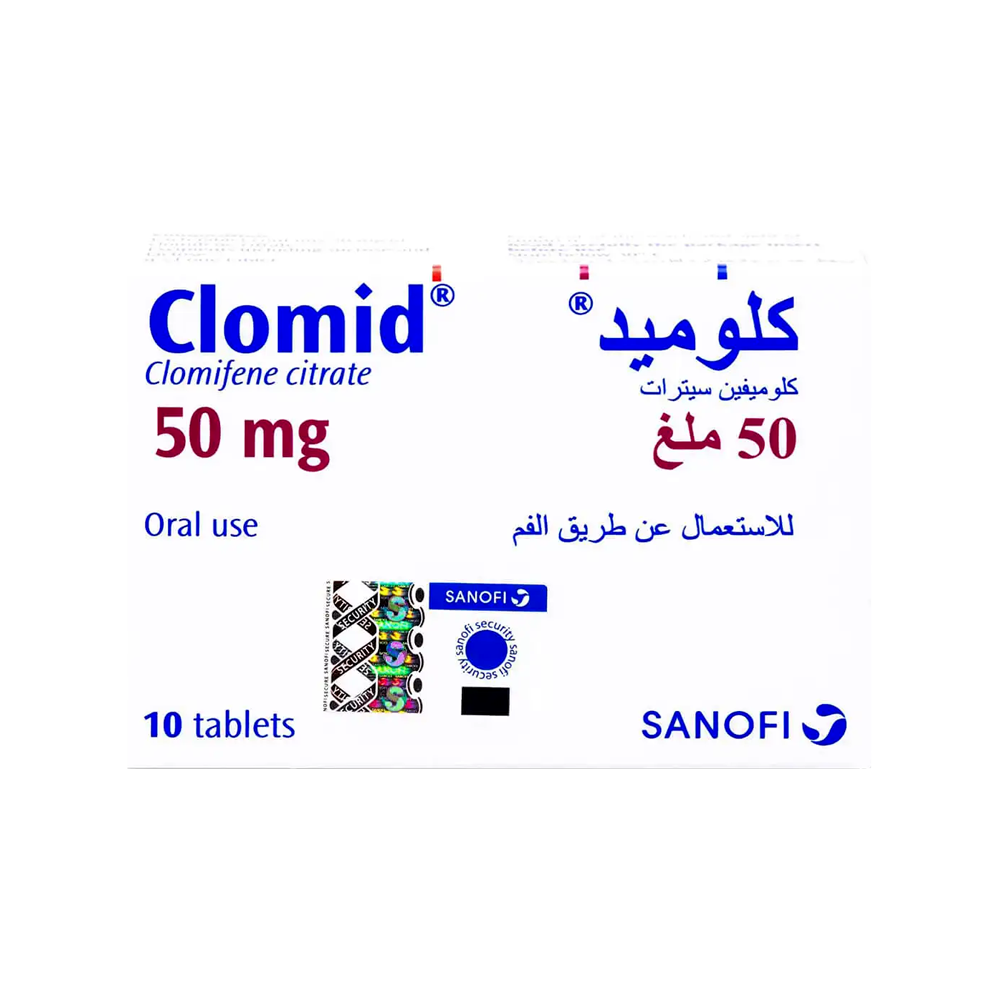
Clomid tablets the active substance Clomiphene. What is Clomid medication. Clomid medication is used to treat some types of infertility in women caused by a defect in ovulation process. A study showed that the success rate of treatment with Clomid reaches 30%. Also, using Clomid may increase the chance of pregnancy with twins, a study showed that using Clomid leads to pregnancy with more than one child at a rate of 7.98%; about 6.9% of them were twin pregnancy, 0.5% were triplet pregnancy, 0.3% were quadruplet pregnancy, and 0.1% were quintuplet pregnancy. Ovulation is likely to occur within 5 to 10 days after taking Clomid, so to increase the chance of pregnancy, sexual intercourse should occur during this period. Clomid can also be used to treat male infertility, especially when their testosterone levels are low. Do not use Clomid before talking to your doctor about risks: • Pregnancy with more than one child at the same time (multiple pregnancy). • Pregnancy cases where the baby grows outside the uterus (ectopic pregnancy). • Any pregnancy that could lead to birth defects or miscarriage. This can happen even if you were not such. • Taking Clomid. You should talk to your doctor about potential risks before taking Clomid. Do not take this medication if: You have a severe allergy to Clomid or any other ingredients of Clomid. • Signs of allergic reaction include: rash, problems swallowing or breathing, swelling of lips, face, throat, or tongue. • You have or have had liver disease. • You experience abnormal or unknown cause of irregular menstruation. • You have a type of cancer that worsens due to hormones. • You have an ovarian cyst. • You are pregnant. You must take a test to confirm you are not pregnant before taking Clomid. Precautions and Warnings Talk to your doctor or pharmacist before taking the medication if: • You have early menopause or have been told you are infertile. • Your period stopped due to weight loss. • You have had seizures or convulsions in the past. • You have 'fibroids' in your uterus. • You have 'cysts' on your ovaries. • You have ovarian swelling. • You have high blood fats (high blood lipids) or a family history of high blood fats. Possible Side Effects Stop using the product and seek immediate medical care if you experience difficulty in breathing or swelling of the throat, face, lips, or tongue, or feel faint. Stop using the product if you experience hives or itching in the face or body. Other medications and Clomid Tell your doctor or pharmacist if you are taking, have recently taken, or might take any other medications. This includes prescription drugs, including herbal medicines. This is because Clomid can affect how some other medicines work. Also, some medicines can affect how Clomid works. How to use Clomid Take this medication orally. Swallow the tablets whole with water. Do not crush or chew your tablets. Do not take more than two tablets per day. Do not take the tablets for more than five days at a time. If you feel that your medication is not working, do not change the dose yourself, but ask your doctor. The usual dose is: Adults only. Your doctor will tell you when to start taking the tablets during your menstrual cycle. In the first treatment cycle, take one tablet daily for five days. If you do not have a period after the first treatment cycle, your doctor will increase your dose to two tablets daily for five days. You should start this second cycle at least 30 days after the first cycle. You usually do not take more than three treatment cycles. If ovulation does not occur after three cycles, talk to your doctor. How to store Clomid Keep out of reach of children and pets. Store in the original container at or below 25°C. Do not use after the expiration date printed on the box. The expiration date indicates the last day of that month. Do not dispose of medicines in wastewater or household waste.