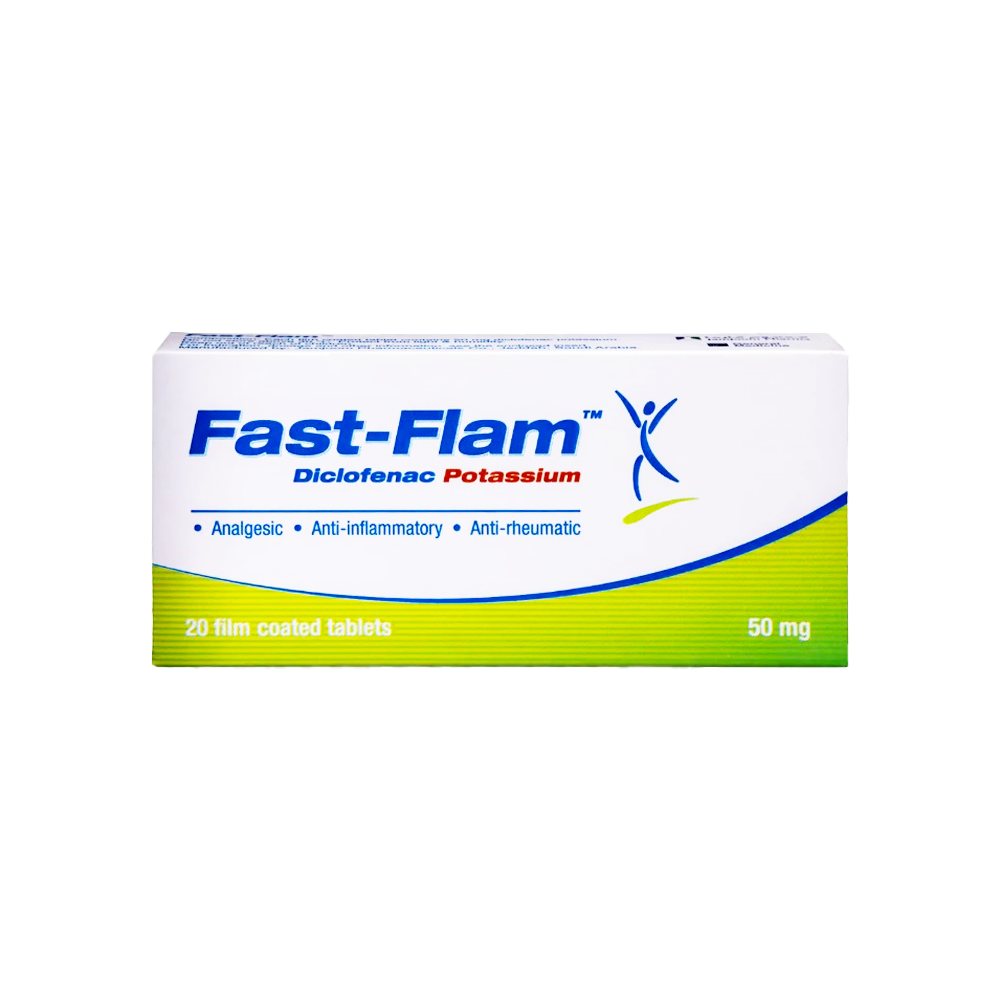
Fast-Flam 50 mg tablets 20 tablets the active substance is what are the uses of Fast-Flam? Used to reduce fever and limit pain, and inflammation in the following cases: Rheumatism pain. Arthritis. Menstrual pain. Muscle and tendon inflammation. Headache of all kinds. Toothache. Sports injuries. Diclofenac and treatment of Corona. Some preliminary research indicates that early use of Diclofenac as one of the non-steroidal anti-inflammatory drugs leads to disease suppression and counteracts any complications of the virus and improves clinical outcomes in treatment. Diclofenac potassium for dental use. Diclofenac potassium is used to relieve toothache because of its significant effect in pain relief and also a fever reducer. What are the contraindications of Fast-Flam? The medication is prohibited without consulting a specialist doctor in the following cases: Diclofenac and pregnancy. Diclofenac passes through the placenta, so doctors recommend avoiding taking the medication during pregnancy, especially in the last three months and near delivery, due to the negative effect of the drug on the heart and blood vessels of the fetuses during the third trimester. Hypersensitivity to the components or NSAIDs in general such as aspirin. Patients with stomach or duodenal ulcers. Patients with kidney, liver, or heart failure. Children under 14 years old. What are the side effects of Fast-Flam? Side effects of this medication include: Abdominal pain. Diarrhea. Fatigue. Burning sensation. Stomach upset. Signs of allergy such as rash or redness. What are the precautions for using Fast-Flam? Used under medical supervision in the following cases: Diclofenac and breastfeeding. Used cautiously considering the importance of the medication for the mother. Diclofenac and female fertility. The use of Diclofenac causes reduced female fertility, and it is not recommended for women planning pregnancy or suffering from fertility difficulties, and it should be discontinued for women undergoing infertility tests. High blood pressure or vascular problems. It is advised to consult a doctor before using the medication if suffering from asthma, bleeding tendency, stomach ulcer, hemophilia, or kidney and liver diseases. Diabetic patients. Elderly. Regular use of painkillers may lead to chronic kidney diseases or cause renal failure. Frequent use of painkillers to treat headaches may result in persistent headaches as a side effect. What are the drug interactions of Fast-Flam? It is preferable to inform the doctor or pharmacist about all medications, herbs, vitamins, and dietary supplements before starting treatment. Should not be used concurrently with: Other NSAIDs to avoid causing ulcers or bleeding in the stomach and gastrointestinal tract. Anticoagulants, as they and the medication increase blood thinning, which may cause bleeding cases, such as warfarin. Diuretics and blood pressure lowering drugs like Acesin. Corticosteroids (such as Prednisone). What are the doses of Fast-Flam and methods of use? Recommended dose: Rheumatoid arthritis: 50 mg orally every 8 - 12 hours. Extended dose: 100 mg orally once daily; can be increased to 100 mg every 12 hours. Spinal pain: 50 mg orally every 8 - 12 hours. Extended dose: 100 mg orally once daily; can be increased to 100 mg every 12 hours. Ankylosing spondylitis: 50 mg orally every 12 hours. Dysmenorrhea: 100 mg orally once, then 50 mg every 8 hours. Mild to moderate acute pain: 100 mg orally once, then 50 mg every 8 hours. What are the forms of Fast-Flam? Coated tablets 50 mg. What are the storage conditions for Fast-Flam? Stored at temperatures below 25°C, away from humidity and direct sunlight. How to use Fast-Flam? When using the Diclofenac powder preparation, empty the contents of the packet into a cup with 30 to 60 milliliters of water. Do not use any other liquid besides water for mixing.